Tuesday, August 05, 2008

2008 Opponent Position Preview: Running Back | by Pat

QBs are done. Time for part two. Let's look at the running backs.

SAN DIEGO STATE - Brandon Sullivan. RS Sophomore. 2007 stats: 58 carries, 220 yards, 2 TDs. New Starter.

Not only does Brandon Sullivan have to replace last year's starting running back, he has to replace the production of last year's leading rusher, quarterback Kevin O'Connell. The 5'11", 220 pound Sullivan has the size to be a workhorse back, but even with three starts last year he only accumulated 58 carries. He should get first crack at starting, but probably doesn't have all that long of a leash. He did contribute in the passing game with 18 receptions coming out of the backfield. Depth: Complimenting Sullivan is Atiyyah Henderson who went through a bit of an injury-filled sophomore slump last season. After rushing for 764 yards in his redshirt freshman campaign, Henderson only totaled 183 yards last season. Like Sullivan he chipped in in the running game with 27 catches. A smaller, speedy back, Henderson has a quick first step and is a solid change of pace from Sullivan. Redshirt sophomore Davon Brown has only seen 12 carries as an Aztec, but is another smaller but faster style back who will likely work into the rotation after being the leading rusher in the Aztec spring game. At fullback for the Aztecs is 6'0 220 pound Tyler Campbell, son of Heisman Trophy winner Earl Campbell, who is strictly used as a blocker.

MICHIGAN - Brandon Minor. (#50) Junior. 2007 stats: 90 carries, 385 yards, 1 TD. New Starter.

The Michael Hart era at Michigan is over as is the pro-style offense that featured him. Junior Brandon Minor is the most likely to be named the official starter as Michigan moves to a spread option attack that will feature more rushers getting an opportunity to carry the ball. Minor has a solid mix of size (6'1" 215 pounds) and enough speed to be hard to catch in the open field. Depth: Likely to see carries along with Minor is junior Carlos Brown (#49) who averaged an impressive 5.1 yards per carry last year over 75 carries. He might see some of those carries while lining up at quarterback, but either way he's the kind of shifty and fast back that will have plenty of success in Michigan's new offense. He did miss a number of practices this past spring which might slow his involvement in the offense a bit. Kevin Grady (#56) has the size to run between the tackles at 230 pounds and is already back practicing with the team following an off-season DUI a few weeks ago. He did miss all of 2007 due to injuries so it might take some time for him to re-acclimate. Freshman and youtube star Sam McGuffie is a quick scatback with a penchant for hurdling and should start to see the ball a few times a game as soon as the first game of the season. There are still more options with speedy redshirt freshman Avery Horn and freshman Michael Cox. Heralded recruit Michael Shaw is also an option, but he might start his Michigan career as a receiver. Redshirt sophomore Mark Moundros is back at fullback and will likely be used as a blocker, rusher, and receiver in the new Michigan offense.

MICHIGAN STATE - Javon Ringer. (#6) Senior. 2007 stats: 245 carries, 1447 yards, 6 TDs. Returning Starter.

Like at quarterback, the Spartans present the first returning starter at running back on the ND schedule. Senior Javon Ringer has had a prolific career and is looking to see the ball even more in 2008 thanks to the graduation of bowling ball back Jehuu Caulcrick. This year those goalline carries will go to the 5'9" 202 pound Ringer who should see his rushing touchdowns jump up even if his stellar 5.9 yards per carry average from last season dips a bit. He did miss spring practice while healing from shoulder surgery, but with 453 carries to his name, it won't take him long to shake off the rust. Ringer also provides a receiving threat as his 295 receiving yards last season were good for third on the team. Depth: The Spartans present a trio of speedy backs this year as junior A.J. Jimmerson and redshirt freshman Andre Anderson are both in the Ringer mold of short and fast. There is an heir apparent to the bulky Caulcrick in 5'11" 230 pound redshirt freshman Ashton Leggett. It's possible he will see the ball in short yardage situations and give Ringer a breather.
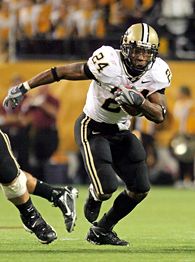
PURDUE - Kory Sheets. (#32) Senior. 2007 stats: 168 carries, 859 yards, 11 TDs. Returning Starter.

In 2008 Purdue returns its solid running back by committee approach. Going by the team's depth chart, senior Kory Sheets is technically the backup, but he will probably see the majority of the carries once again. He has been sent to the bench for fumbling in the past, but his speed is hard to keep off the field for very long. Quick and shifty as a runner and receiver (30 receptions last season), Sheets should be in line for a solid final season with a great chance at breaking Mike Alstott's Purdue career record of 39 rushing touchdowns. Depth: Splitting carries with Sheets is senior Jaycen Taylor. He only missed four games last season after breaking a bone in his arm and totaled 107 carries for 560 yards and 4 touchdowns. Though smaller than Sheets, Taylor is a tough runner and even averaged slightly more yards per carry than Sheets last season (5.23 vs. 5.11). Like Sheets, he will provide the Purdue backfield with plenty of experience and production. Behind the two co-starters is sophomore Dan Dierking. Most of his 181 yards came in garbage time last season, but he did see the start against Michigan, even if he did finish that game with only 5 yards on 8 carries.

STANFORD - Anthony Kimble. RS Senior. 2007 stats: 115 carries 509 yards, 8 TDs. Returning Stater.

Even though he missed five games in 2007, Anthony Kimble was still the Cardinal's leading rusher for the second straight season. His 4.43 yards per carry average was certainly respectable considering the below average performance of the Stanford offensive line. When he can find some open field, Kimble has enough speed to be dangerous. He also has just enough size at 6'1" 210 pounds to lower his shoulder on occasion and fight for a few extra yards. Depth: Backing up Kimble is the promising junior Toby Gerhart. At 6'1" 230 pounds, Gerhart is a physical back capable of moving the pile. Expected to build upon his 2006 debut, Gerhart was lost for the 2007 season with an injury in the second game of the season against San Jose State. To that point he was averaging over 11 yards a carry against the Spartans with 140 yards on 12 carries. Sophomore Jeremy Stewart started four games last year as an injury replacement and wound up as the team's second leading rusher with 343 yards. 6'1" 235 pound sophomore Owen Maricic returns at fullback after starting every game last year and earning all-conference notice as a physical blocker.

NORTH CAROLINA - Greg Little. Sophomore. 2007 stats: 59 carries, 300 yards, 2 TDs. New Starter.

A familiar name tops the North Carolina running back depth chart. ND wide receiver commit Greg Little is now a running back for his hometown Tarheels. After being switched from receiver towards the end of the season, Little started the final two games and ran for over 100 yards each game at an impressive 5.5 yards per attempt pace. Taller than most backs at 6'3", Little is a powerful back that will take tacklers for a few extra yards once he builds up a head of steam. He's also surprisingly quick and nimble for his size and tough to catch if he's allowed to get to the corner. He's not as heralded as some of the other names on this list, but he is in line for a very productive 2008. Depth: In what is likely a record of some sort, North Carolina's leading four rushers last season were freshmen (two were RS freshman). Johnny White actually led the team in rushing but was moved to cornerback this spring. Anthony Elzy was the team's second leading rusher but will see his carries drop as he was moved to fullback. At 5'10" 210 he showed a nose for the endzone in goalline carries as his 5 rushing touchdowns led the team. He'll compete with returning starter fullback Bobby Rome who is more blocker than rusher. Sophomore Ryan Houston provides even more size at 6'2" 225 pounds, giving the Tarheels another big and physical running back on the depth chart.

WASHINGTON - Brandon Jonhson. Sophomore. 2007 stats: 51 carries, 196 yards, 2 TDs. New Starter.

While Jake Locker will probably lead the Huskies in rushing in 2008, sophomore Brandon Johnson is technically the starting running back. After seeing only 19 carries in the first 10 games of the season, Johnson got 23 carries against Cal when Locker was out with an injury. He responded with 121 yards and a touchdown, which translates to an impressive 5.26 yards per carry clip. He's still pretty inexperienced and will have to prove the Cal game was a sign of things to come and not a fluke if he's to make a serious impact on Washington's offense. Depth: Behind Johnson is even more inexperience with a pair of redshirt freshmen fighting for the 2nd string spot in Willie Griffen and Brandon Yakaboski. Freshman Chris Polk has the talent to make an immediate impact at running back, but it's unclear if Washington will keep him at running back or move him to receiver. At fullback Paul Homer and Luke Kravitz return and again should receive goalline carries; the two picked up 5 of Washington's 7 returning non-Locker scored rushing touchdowns.

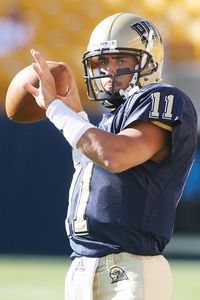
PITTSBURGH - LeSean McCoy. (#11) Sophomore. 2007 stats: 276 carries, 1328 yards, 14 TDs. Returning Starter.

On the verge of becoming a college star, sophomore LeSean McCoy will compete for all-conference and All-America honors in only his second year as starter. There might not be a more dangerous running back on Notre Dame's schedule. Fast with excellent change of direction, McCoy will be tough to tackle and hard to catch in the open field. He also showed he can catch last year by hauling in 33 passes for 244 yards and a touchdown. Depth: Adding experience to Pitt's running back depth chart is senior LaRod Stephens-Howling. Stephens-Howling is an extremely quick scatback type who picked up 320 yards on 78 carries. He'll be more of a compliment to McCoy in 2008, but will be effective when defenses tire later in the game. Redshirt freshmen Shariff Harris reportedly had a strong spring and will push for carries as the season wears on. One of the better fullbacks ND will face is senior Conredge Collins (#1 FB), who has started 16 games in his career and can block and run out of the fullback position (33 carries, 110 yards, 1 TD in 2007).

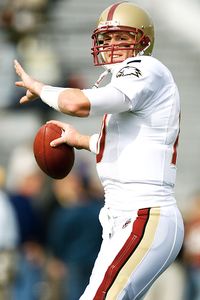
BOSTON COLLEGE - Josh Haden. Freshman. 2007 stats: N/A. New Starter.

Not many programs in the country will be as young at running back as Boston College. Consider that none of the running backs on the roster have carried the ball a single time in college yet. Josh Haden enrolled early and is now penciled in as the team's starter heading into fall camp. A highly recruited prospect, the extremely quick Haden will have to learn quickly as the Eagles primary ball carrier. At 5'8" 190 pounds he's on the smaller side, which could limit his ability to be an every down back for BC. He should be effective if he can get to the corner, but running between the tackles won't be his strong suit. Depth: Looking to get carries when Haden needs a break are three other freshmen in Montel Harris, Eric Reynolds, and Jerry Kelly, and sophomore converted free safety Dan Mulrooney. Whichever one picks up pass blocking the fastest might have a leg up on his competition. Sophomore James McCluskey returns at fullback and is BC's leading returning rusher with a whooping 14 yards on 8 carries. He did pick up three touchdowns on those 8 carries and he should remain a goalline threat once again.

NAVY - Eric Kettani. (#12 FB) Senior. 2007 stats: 152 carries, 880 yards, 10 TDs. Returning Starter.

If there is one constant over the past few years, it is the tough, scrappy, and effective Navy fullback. Eric Kettani returns after leading Navy in rushing last year. His 5.79 yards per carry average is something you'd expect to see out of a speed back instead of a fullback. Depth: Navy will break in a few new starters at the slot back position. Quarterback Jarod Byrant will likely get some carries out of this position as will senior Greg Shinego. Shinego only saw 2 carries for 9 yards last year so he'll have to pick up the offense in a hurry. Senior Shun White did get more experience last year picking up 620 yards and 7 touchdowns on 78 carries. While he will see the ball more, with the increased attention he'll be hard-pressed to repeat his standout 7.97 yards per carry average. When White needs a break, quick sophomore Andre Byrd will get his chance to make an impact. Backing up Kettani at fullback is junior Kevin Campell, though he's rather undersized for fullback at 5'11" 193 pounds.

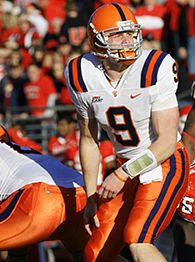
SYRACUSE- Delone Carter. RS Sophomore. 2007 stats: out with injury. New Starter.

One of the four teams to average fewer rushing yards per game than Notre Dame, Syracuse is banking on the improved health of its running back depth chart to see improvement in 2008. Delone Carter missed all of last season with a dislocated hip but is healthy now and hopes are high he can build on his debut 2006 season when he lead the team in rushing with 713 yards and four touchdowns and earned Freshman All-America honors. He only participated in non-contact drills this past spring so it might take him some time to get back into game shape, but he'll have nearly the entire season to do so before facing Notre Dame. Depth: Continuing with the injury theme, Curtis Brinkley was Syracuse's leading rusher this past season with 371 yards and 2 touchdowns on 111 carries, but also was knocked out the final four games of the year with a broken leg. Like Carter he was held out of contact drills this spring so there will be a period of readjustment. 6'2" 215 pound Doug Hogue saw action last year as a freshman with Carter and Brinkley out with injury and will likely continue to see the occasional carry. Tony Fiammetta returns at fullback where in addition to blocking he is the occasional receiver out of the backfield. He only had 3 rushing attempts last season but caught 12 passes for 75 yards.

SOUTHERN CAL - Stafon Johnson. (#13). Junior. 2007 stats: 98 carries, 673 yards, 5 TDs. New Starter.

The logjam of talented running backs continues at Southern Cal, although the numbers are a bit lower than last year. Stafon Johnson is the leading returning rusher and if he can avoid injuries like the pinched nerve in his foot that cost him a few games last season, he should have a spectacular season. Consider that the only non-Navy rushers who averaged more than Johnson's amazing 6.87 yards per carry were Florida's Percy Harvin, Arkansas's Felix Jones, and West Virginia's Noel Devine. That's pretty good company. Depth: The only thing that probably will hold Johnson back are the other talented running backs on the roster. Joe McKnight (#51) got plenty of hype as the "next Reggie Bush" and slowly started to show why as he picked up 540 yards and 3 TDs on 94 rushing attempts. His breakout game against Illinois in the Rose Bowl where he averaged 12.5 yards per carry on 10 rushes will only increase expectations for 2008. C.J. Gable (#23) only played in three games before an abdomen strain knocked him out for the rest of the season. He actually was the starter at the beginning of last season and he made the most of his 13 carries against Idaho, Nebraska, and Washington State, averaging 11.0 yards per rush. If he can stay healthy he will be another dangerous weapon for the Trojans. Allen Bradford has fought being moved to fullback, insisting he's a running back. The 6'0" 225 pounder may have worked himself into the rotation after an impressive spring practice where he was tough to bring down and faster than expected. Overlooked but crucial to the Trojan offense is returning starting fullback Stanley Havili (#3 FB). Effective as a blocker, rusher, and receiver, Havili is one of the best fullbacks in the country. In addition to 134 yards on 21 rushing attempts he had 34 receptions for 248 yards. His five receiving touchdowns were more than any wide receiver on the team.

2008 Opponent Running Back Analysis and Ranking

This was one of the previews I was most interested in completing. Almost even more important than the play of the offense line this season will be how the Irish defense stands up to the run. Last year teams could run at will on Notre Dame and that's just what they did. With that in mind, this year's crop of opponent running backs aren't overly scary. Technically, the Irish will only face four returning starters at running back, five if you count fullback Eric Kettani from Navy. However, included in the mix are a handful of extremely talented runners. Javon Ringer, LeSean McCoy, Stafon Johnson, and Joe McKnight are all likely candidates for post-season All-American teams and Kory Sheets has had plenty of success against ND over the past few seasons. If ND is going to have a better than expected year, they will need to find a way to slow down at least some of these talented backs.

Slow down is the operative word because this year's running back opposition is leaning heavily to the speed side of the equation. There aren't many big banger types like Jehuu Caulcrick or Robert Hughes. That's good news for an Irish defensive line that loses Trevor Laws and doesn't feature all that much heft. The obvious down side is that ND better not miss too many tackles when they have the chance because backs like Ringer, McCoy, Sheets, and McKnight aren't likely to be caught again in the open field. Even the newer faces like Brandon Minor, Greg Little, and Josh Haden are so-called home run threats. Tenuta was stresssing fundamentals and proper tackling all spring with the linebackers. Let's hope it pays off.

Some good news for the Irish is the opposing youth movement at running back means that pass blocking won't be an area of strength for many of them. Michigan State, Purdue, Stanford, and Navy are the only teams that start a senior running back. Meanwhile North Carolina, Washington, Boston College, Pittsburgh, and Syracuse feature backs that are only in their first or second year of playing. If ND is able to continually mask and disguise their blitzes, that will make things harder for the inexperienced running backs. That will either result in more QB sacks or opposing coaches being forced to play more veteran backups at the expense of the younger, more talented players (see ND using Junior Jabbie all last year as the 3rd down back because he was the best blocker).

On the other hand, it seems that just about every team that uses a fullback is returning a starter, so that will definitely help protect the opposing QB as well as present a veteran obstacle for the Irish linebackers on rushing downs. Other than Havili from USC, Kettani from Navy, and Collins from Pitt, most are strictly limited to blocking though and aren't much of a threat running the ball. Still, in those short yardage battles that often determine a game, whichever Smith winds up starting at middle linebacker for ND is going to have to win his fair share of battles against the opponents hard charging fullback.

I'd like to say that ND's road to improvement is going to be even easier given the lack of overall talent handling the rushing duties for the opposition. But that's just not true. Last year's running back crop was probably more talented top to bottom, but ND definitely has its work cut out for it in stopping the run against this year's young, but full of potential, group of backs. If you see ND consistently stopping backs for a loss or minimal gain early in the year, that is a great sign that the Irish will exceed expectations. Likewise, if teams keep finding ways to rush for first downs, it's going to be a long season.

Looking at the rankings, I think the top three are a class above the rest of the field. All feature All-American caliber backs and will present a major challenge for the Irish run defense. The next four teams lack the superstar element but feature experience, depth, speed, or all three. The third tier of backs probably starts at #8 with Stanford, but don't ignore the possibility that Kimble or Syracuse's Delone Carter could score points quickly with a few long runs.

1. Southern Cal - A ton of talent, superstar potential, and now experience.
2. Pittsburgh - McCoy is the star, but Stephens-Howling and Collins give the position depth.
3. Michigan State - It's now a one man show with Javon Ringer. If he can stay healthy, he'll deliver.
4. Purdue - Sheets and Tayor give Purdue the most experienced duo on this list.
5. Michigan - Lots of new faces in the post-Hart era, but a plenty of talent and speed as well.
6. Navy - Kettani leads a group that isn't as experienced as years past, but still effective.
7. North Carolina - This could be too low if Little has a breakout year, which he might.
8. Stanford - Gerhart adds more depth and gives Kimble some help finally.
9. Syracuse - There is some potential with Carter and Brinkley, but it's unproven as of now.
10. San Diego State - Sullivan, Henderson and Brown might develop into a solid trio of backs.
11. Washington - Not much experience or depth. Having Polk stay at RB will help.
12. Boston College - Haden will have some highlight plays, but he'll also make freshman mistakes.

Monday, August 04, 2008

Long Distance Operator | by Mike

Jeff Samardzija's recent major-league debut reminded me of some data I had looked at around this time last summer. I was looking for ways to measure Samardzija's importance to the offense and what we could reasonably expect his successors to produce. I was also interested in looking at his "quick-strike" capabilities. Even when things were going well for the Irish offense in 2005, I can recall posts on ND message boards longing for the "quick-strike offenses" of other top teams. While ND certainly lacked someone with the explosive ability of Reggie Bush in 2005, I was surprised by posts suggesting ND didn't have anyone in Dwayne Jarrett's league either.

For these reasons, I decided to look at the "quick-strike ability" of some elite college football offenses. I think of a "quick strike" as a touchdown scored from beyond field-goal range. I recalled that Mason Crosby's 58-yard field goal against the Hurricanes in 2005 was the longest FG in college at sea-level without a tee, so I figured that with almost any other kicker a touchdown play of 40 or more yards (at least a 57-yard field goal) would be from beyond field-goal range. Obviously, this is a somewhat arbitrary measure, but it seemed good enough. I then identified who I believed to be the premier receivers in college football for the two preceding years - Samardzija, Calvin Johnson, Ted Ginn, Dwayne Jarrett and Mario Manningham - and looked at how many touchdown receptions of 40 or more yards they each had. As with the distance threshold, this list represents my gut reaction rather than the product of extensive data review. Here are the numbers:

      Samardzija                   Ginn                   Johnson
Yards Opponent Year Yards Opponent Year Yards Opponent Year

80 Stanford 2005 73 Illinois 2005 66 UVa 2006
55 Purdue 2005 58 No. Ill. 2006 58 UVa 2006
52 UW 2005 57 BGSU 2006 53 VaTech 2006
51 AFA 2006 57 MSU 2005 48 WVU 2006
45 UCLA 2006 56 ND 2005 42 NCSU 2006
43 MSU 2006 42 Miami (OH) 2005 42 UConn 2005
42 UNC 2006

Manningham Jarrett
Yards Opponent Year Yards Opponent Year

69 ND 2006 62 Mich 2006
49 Wisc 2005 43 ND 2006
43 MSU 2005
41 Minn 2006
41 MSU 2006
What do these numbers tell us? Well, they certainly tell us Jeff was one of the most fun players in the country to watch during those two years. However, I certainly would not attempt to produce an ordinal ranking of the best deep threats based solely on these numbers. There are numerous caveats that should be applied to these numbers. First, they're largely a function of where I set the thresholds. If your threshold for a "quick strike touchdown" is 50 or more yards, then the numbers become Ginn 5, Samardzija 4, Johnson 3, Jarrett 1 and Manningham 1. Additionally, these numbers do not account for strength of schedule, quality of quarterback play (e.g., while Samardzija was catching passes from Brady Quinn, Calvin Johnson's quarterback was Reggie Ball), games missed due to injury, defenses accounting for a given player, etc. Finally, I only looked at touchdowns, but some of the biggest plays made by these receivers did not reach the endzone. Recall Samardzija's 73-yard reception against Tennessee in 2005 or Dwayne Jarrett's 4th and 9 reception against the Irish, easily as significant as any of the above touchdowns.

While these numbers are thus an imprecise measure of ability, they are (obviously) an accurate measure of production. Big passing plays are a key component of a functioning Weis offense. As SMQ noted following the 2005 season:
And there's the unreal 43 pass plays over 25 yards (and 100 over 15), which negates the notion of a short, safe, toss-and-pitch philosophy with no big play threats.
SMQ's comment mentions a disparity between stats and perception when it comes to Weis's first two Irish offenses. Despite the perception of a "short, safe, toss-and-pitch philosophy" designed to produce meticulous drives, Quinn & Co. frequently chewed up large swaths of yardage in single plays. And despite a widespread perception of Jeff Samardzija as a "young Ed McCaffery", he turned in more 40+ yard TD receptions during the '05 and '06 seasons than Ginn, Johnson, Manningham and Jarrett. Part of this perception is probably due to the importance of yards-after-catch to Samardzija's long touchdowns. When most football fans think of elite deep threats, they have visions of a receiver catching a ball from the quarterback after getting behind all the defensive backs and sauntering into the endzone. That certainly seemed to be the formula for the long TDs on the above list that came against the Irish defense (Ginn in the Fiesta Bowl, Manningham in South Bend). While Jeff's 52-yarder against Washington and 51-yarder against Air Force were of this variety, he created several of his long touchdowns with the ball in his hand, using his superior agility and balance to make cuts that left the defensive backs between him and the endzone stumbling to the turf. However, regardless of the form of Jeff's quick strikes, the numbers make clear that he was a playmaker at wide receiver by any credible definition of the term.

Why revisit these numbers at this point? On the list of reasons why Notre Dame's offense stunk in 2007, the lack of 40+ yard passing touchdowns ranks behind a multitude of other reasons. (For the record, the longest passing touchdowns the Irish offense produced in 2007 all covered 25 yards - Golden Tate against Purdue and David Grimes and Duval Kamara against Duke. Even David Grimes' dramatic and unjustly overturned grab against Stanford only covered 29 yards.) While thinking about these numbers, I realized how important having playmakers at wide receiver is to the Notre Dame offense under Weis. Weis's NFL reputation was burnished by his ability to construct a competent passing attack with a green quarterback and a wide receiver corps of Troy Brown, David Patten and some warm bodies, suggesting that elite WR talent was not a requirement for his offense. However, Samardzija and Stovall's ability to create big plays in the passing game was a key component in 2005's offensive explosion and the loss of Stovall accounted for much of the decline from 2005 to 2006. The Irish offense has several young receivers that could emerge as playmakers, including sophomores Kamara and Tate and freshmen Michael Floyd and Deion Walker. With a sophomore quarterback and lingering questions along the offensive line, it will be critical for one or more receiver to emerge as someone who can score from anywhere and reduce the need for Clausen and the line to sustain meticulous drives. In a few weeks, we'll find out if this will happen in 2008. Then again, the best aid for a young quarterback and an uncertain line is a strong commitment to the running game. Hopefully we'll see this as well.

On the outside looking in | by Pat

For the third time in four years, Notre Dame is starting the season out of the Top 25 in the pre-season USA Today Coaches poll. ND received 5 votes, which translates into 43rd place. It's the lowest starting point, rankings-wise, for the Fighting Irish under Charlie and the lowest for ND period since 2002, when ND was slotted in 46th place.

Here is a glimpse at the rankings of the 2008 ND opponents that received votes:

2. USC
24. Michigan
31. Boston College
33. Pittsburgh
40. Michigan State
48. North Carolina
Hardly a murderer's row this season. No clear cut favorite at the top either as Southern Cal was one of six teams to get first place votes. Of course, preseason polls aren't usually even worth the paper they are written on, even if Spurrier didn't vote for Duke this year to "keep the integrity of the poll alive".

Dipping back into a familiar routine, let's take a look at the biggest gainers and losers from last year's final poll to this brand spanking new pre-season version. I certainly agree with the theory that pre-season polls are more of a reflection of the results of the previous season than what we should all expect to see in the coming months. However, there are still a few teams that experience a sizable boost or drop in perception after the final whistle of last season sounds.

The final Coaches Poll from last season can be found here. Comparing the two, Boston College experienced the biggest change in votes of any team, reflecting the loss of Matt Ryan and the army of 5th year seniors on last year's team. Michigan lost a ton of talent as well, but Coach Rodriguez's reputation likely kept the drop from being too severe. Florida welcomes back Heisman winner Tim Tebow and sees the biggest boost in rankings.

biggest gainers

team
08
07 final
diff
5 Florida
1,293 567 +726
9 Clemson 999 319 +680
12 Wisconsin 747 333 +414
14 Texas Tech 644 242 +402
21 South Florida 350 6
+344
4
Oklahoma 1,329 1,016 +313
11 Auburn
888 624 +264
20 Oregon
399 192 +207
22 Penn State
313 127 +186
23 Wake Forest
203 53 +150
biggest losers

team
08
07 final
diff

Boston College
47 898
-851
13
Kansas 714 1,217
-503

Hawaii 0 427
-427
15 Virginia Tech
568 979
-411

Cincinnati
13 376
-363
6 LSU 1,163 1,500
-337
18
Tennessee
506 826
-320
24
Michigan
112 413
-301
8
WVU 1,008 1,239
-231
7
Missouri
1,143 1,241
-98

Which teams do you think deserved their big swing and which do you think are still either overrated and underrated?

Thursday, July 31, 2008

2008 Opponent Position Preview: Quarterback | by Pat

And just like that, it's nearly August. The kickoff to fall practice is one week from today and the start of the college football season is a mere 30 days away. So let's get cracking and dive right into the BGS Opponent Position Previews and get started with the Quarterbacks. As always, the number in parentheses following the QB's name is where Phil Steele ranks him. And as always, feel free to chime in with any additional info or corrections in the comments section.

SAN DIEGO STATE - Ryan Lindley. 2007 stats: Did not play. RS Freshman. New Starter.

After sitting out the 2007 season, Ryan Lindley was named the presumptive starter at the conclusion of spring practice and gets the uneviable task of replacing four year team captain and current New England Patriot Kevin O'Connell. There isn't much to go on with the 6'3" 205 pound QB as he has yet to attempt a pass in college. Going back to the high school recruiting reviews of him, Lindley reportedly has a strong arm and has shown an above average ability to read a defense. He might develop into a solid starter, but it's asking a lot to expect too much of him by the time the Aztecs travel to Notre Dame Stadium. Depth: Close behind Lindley on the depth chart is junior college transfer Drew Westling. Aztec coach Chuck Long said it's still possible that Westling could beat out Lindley in fall camp and be the starter for the first game against Cal Poly on August 30th. Last year at Southwestern College, Westling threw the ball 325 times for 173 receptions, 2,087 yards, 14 touchdowns, and 12 interceptions. The only scholarship QB to actually throw a pass for the Aztecs last year is sophomore Kelsey Sokoloski. However, he is currently slotted as the third string QB for the Aztecs.

MICHIGAN - Steven Threet. 2007 stats: Did not play. RS Freshman. New Starter.

Michigan's quarterback situation was thrown for a loop following the hiring of spread option oriented coach Rich Rodriguez and the transfer of strong-armed Ryan Mallett. While the competition for the starting gig will continue through fall camp, the leader so far appears to be Georgia Tech transfer Steven Threet. Threet is a big dropback QB at 6'6", 230 pounds, but that isn't exactly a great fit for an offense that prefers a quicker, more mobile quarterback. When he does drop back to pass, Threet has the skills to succeed, but his inexperience and less than ideal fit for the offense will likely hinder him early in the season. Depth: Pushing Threet is a mix of quarterbacks that present two different options. Sticking with the more classic drop-back model is walk-on Nick Sheridan and junior David Cone. Sheridan is quicker and more mobile than Cone or Threet, but lacks their strong arm. Cone is the slowest of the lot and likely will find himself buried on the depth chart. Presenting a different option are senior running back Carlos Brown, who played quarterback in high school, and freshman quarterback Justin Feagin, a legitimate run/pass threat out of Florida. Both have the speed to excel in the spread option offense but both are very raw as passers. It's likely one or both will see the field at QB in some capacity next season, but it would be asking a lot of them to provide more than a few snaps a game by the time the Wolverines roll into South Bend.

MICHIGAN STATE - Brian Hoyer. (#48) 2007 stats: 223-376, 2725 yards, 20 TDs, 11 INTs. RS Senior. Returning Starter.

The Fighting Irish will finally face a veteran quarterback in the third week of the season in Spartan fifth year senior Brian Hoyer. 2007 was Hoyer's first year as a starter and he did a respectable job until a four interception bowl game against Boston College. He still finished with a 2-1 TD/INT ratio, but only threw 14 touchdowns versus 10 interceptions against teams with winning records. Now a returning starter the interceptions should drop and his completion percentage should get above 60%. Depth: The Spartans lost both of last year's backups to transfer as Nick Foles and Connor Dixon left for Arizona and Duquesne, respectively. That leaves Michigan State pretty thin at QB with redshirt freshman Kirk Cousins as the lone backup. Heralded Oklahoma transfer Keith Nichol is likely the future, but he will have to sit out this year.

PURDUE - Curtis Painter. (#2) 2007 stats: 356-569, 3846 yards, 29 TDs, 11 INTs. Senior. Returning Starter.

Curtis Painter threw for a thousand more yards than the next more prolific QB in this preview. However, like Brian Hoyer, Painter built up many of his stats against the weaker competition on the Purdue schedule. Consider he threw 20 touchdowns versus 4 interceptions against teams with losing records (and 2 of those INTs were against ND) while throwing only 9 touchdowns versus 7 interceptions against teams with winning records. He'll throw for a ton of yards again in 2008 and push for multiple Big Ten passing records, but will have to improve against the better teams on the Purdue schedule to be a true star. Depth: Junior Joey Elliot doesn't have much game experience, but has been in the offense for the past three years and has seen the field on occasion. Pushing Elliot is redshirt freshman Justin Siller, though both will have to wait until next season to really see the field much.

STANFORD - Tavita Pritchard. 2007 stats: 97-194, 1114 yards, 5 TDs. 9 INTs. Junior. Returning Starter.

Tavita Pritchard started last year as a backup but became the starter when normal starter T.C. Ostrander suffered a stroke. His first start was the unforgettable upset of Southern Cal, but even that isn't going to keep his starting job safe for 2008. Heading into fall camp he hasn't been named the de facto starter and will have to earn it. He certainly has the leg up on his competition as he has more experience than any of the other quarterbacks on the roster. However, that experience was paired with uneven performance. In the seven games he started last year, only once did he throw more touchdown passes than interceptions. Depth: Mentioned by Coach Harbaugh as co-#1 with Pritchard as practice starts is redshirt sophomore Alex Loukas. More of a scrambler than Pritchard, Loukas has yet to play in his two years at Stanford but has enough talent to push out the returning veteran. Making things more complicated is Michigan transfer Jason Forcier. Another run-pass quarterback, Forcier is currently slotted as the third string QB as he recovers from some spring injuries. If Stanford's offensive line proves to still be pourous, an athlete like Forcier might be an intriguing option. Last but not least is heralded recruit Andrew Luck. It's doubtful he'll see the field much early in the year, but he could very well have the best career of all the quarterbacks on the roster.

NORTH CAROLINA - T.J. Yates. 2007 stats: 218-365, 2655 yards, 14 TDs. 18 INTs. Sophomore. Returning Starter.

In his first year as starter last season, then freshman T.J. Yates got off to a great start, throwing nine touchdowns and only three interceptions. But then the bottom dropped out and he threw zero touchdowns and five interceptions in his next three games. His attempts and yardage were impressive and schools records to boot, but like most first year starters he threw too many picks to be truly effective. Recovery from surgery forced him to miss spring practice which certainly won't help his development. Depth: Junior Cameron Sexton was the starter for a few games in 2006, but lost his job to Yates last season. Now he's in a fight for the backup spot with redshirt freshman Mike Paulus. A highly recruited player, the 6'5" 215 pound Paulus probably has the highest ceiling of any of the quarterbacks on the roster. It's possible that if Yates struggles, Paulus might finish the season as the starter.

WASHINGTON - Jake Locker. (#19) 2007 stats: 155-328, 2062 yards, 14 TDS. 15 INTs. RS Sophomore. Returning Starter.

Probably the biggest name on this list along with Southern Cal's Mark Sanchez, Jake Locker is being compared to Florida's Tim Tebow everywhere you look. A fantastic athlete, Locker has the size to fight through tackles, the speed to blow by unsuspecting defenders, and great vision when he does tuck and run. The 6'3" 225 pound Locker was nearly a 1,000 yard rusher on his own with 986 rushing yards and 13 rushing TDs last year. Where he fell a bit short in his impressive debut last season was his completion percentage, which wound up at 47%. Like many of the other rookie QBs in this preview, he also threw more interceptions than touchdowns. Perhaps some of that can be blamed on his surrounding cast, but in order to fulfill some of the All-American expectations being lobbed his way, he'll need to show much improved accuracy and a sizable drop in interceptions. It would be a bad idea to bet against him doing so. Depth: Redshirt freshman Ronnie Fouch is more of a traditional pocket passer so if he gets into the game he won't be a threat to tuck and run like Locker. He also hasn't thrown a pass in college, which makes for a pretty big gulf between Washington's starting and backup QB. The fight for the third spot on the depth chart will be between walk-on Taylor Bean and two freshmen, Luther Leonard and Dominique Blackman, who still has yet to be declared academically eligible. In other words, behind Locker on the depth chart are four (or maybe only three) young and inexperienced players who have yet to attempt a collegiate pass.

PITTSBURGH - Bill Stull. 2007 stats: 14-20, 177 yards, 1 TD. 0 INTs. RS Junior. Returning Starter.

Pittsburgh has an interesting quarterback situation. Bill Stull was the opening day starter last year, only to be lost for the season due to a thumb injury on this throwing hand. He's back and the presumptive starter, even though he actually has the least amount of experience of the four quarterbacks competing for the starting job. Depth: Pushing Stull will be former star recruit sophomore Pat Bostick (#53). He was forced into action last year as a freshman and responded with 155 completions on 353 attempts for 1,500 yards in eight starts. His TD/INT ratio was poor with 8 touchdowns against 13 interceptions so like many of the other younger quarterbacks on this list, he will need to show better decision making if he wants to supplant Stull as the starter. Sophomore Kevan Smith actually started the first three games after Stull went down, but will likely compete with junior college transfer Gene Cross for third string status. At the very least, Pittsburgh has a number of quarterback options with a few starts under their belt.

BOSTON COLLEGE - Chris Crane. 2007 stats: 2-4, 28 yards, 0 TDs, 0 INTs. RS Senior. New Starter.

Replacing the successful Matt Ryan will be a tall task for the inexperienced Chris Crane. He did start a game against Buffalo in 2006, so he's not as inexperienced as his 2007 stats imply, but it will still be a brave new world for him as the full time starter. At 6'4" 235 pounds he's a big QB who is just quick enough to probably see some runs called specifically for him. He's also a 5th year senior so while he may not have faced many tense game situations, he's hardly new to college football. He should do better than many might expect and prove to be a solid manager of the offense for the Eagles. Depth: Redshirt freshman Dominique Davis had a strong enough spring to move into the backup spot and signals the transition to more mobile quarterbacks favored by offensive coordinator Steve Logan. Behind him currently is junior college transfer Codi Boek, another dual threat style quarterback.

NAVY - Kaipo-Noa Kaheaku Enhada. 2007 stats: 55-98, 952 yards, 8 TDS, 5 INTs. Junior. Returning Starter.

The QB who replaces Roger Staubach as the answer to the "last Navy QB to beat Notre Dame" trivia question, Kaipo-Noa Kaheaku Enhada returns for his third year as Navy's starter. In addition to his improved passing last season, the Midshipmen senior rushed for 834 yards and 12 touchdowns on 180 attempts. A veteran with plenty of game experience, Kaheaku Enhada will help Navy ease into the post-Paul Johnson years. He will continue to make solid decisions with the ball this year and will likely push his TD/INT ratio even higher in the right direction. Depth: Senior Jarod Bryant is a top notch backup who will see the field even if he isn't lining up at quarterback. When he's not playing running back or on special teams, Bryant will provide experience and leadership at the QB position for the Midshipmen. His 94 carries last season were good for fourth on the team and he even found time to attempt 31 passes, completing 17 of them for 252 yards.

SYRACUSE - Andrew Robinson. 2007 stats: 154-292, 2192 yards, 13 TDs. 7 INTs. Junior. Returning Starter.

Syracuse is in the middle of a horrible run, but junior Andrew Robinson is one legitimate bright spot. Despite his team's performance and the fact he was a first time starter last season, he still managed to throw more touchdowns than interceptions. He also saved the best for last when he completed 62% of his passes against a solid Cincinnati defense for 419 yards, 3 touchdowns, and 0 interceptions in Syracuse's final game of the season. His numbers should only improve this season if Syracuse can find a running game to compliment him and he should make much better decisions with the ball. Depth: The name of the backup, Cameron Dantley, should be familiar to ND fans as the former walk-on is the son of Irish hoops legend Adrian Dantley. He won't push Robinson for playing time, but provides a more mobile threat with eight games worth of experience which could come in handy for 'Cuse as Notre Dame was the only team that let up more sacks.

SOUTHERN CAL - Mark Sanchez. (#17) 2007 stats: 69-114, 695 yards, 7 TDs. 5 INTs. RS Junior. New Starter.

The winner of Southern Cal's spring QB derby, redshirt junior Mark Sanchez will finally get a chance to run the Trojan offense. Game experience is always highlighted in this preview and Sanchez did get some when John David Booty went out with injury in the middle of the last season. Including the Notre Dame game, Sanchez started three games before returning to the bench. He also saw limited action in five others. The ND game was the highlight of his season as his 4 TD passes and 0 interceptions against the Irish are a drastic improvement over the 3 touchdown passes and four interceptions he threw in his other two starts. He should be much improved though after a spring and fall camp of getting all of the first string snaps in practice and is in line for a very solid 2008. A better athlete than the past few Trojan quarterbacks, Sanchez will be very tough to defend on the frequent QB rollouts that have been a hallmark of the Trojan offense as of late. The difference between a solid year and a star year will come down to his decision making and how efficiently he runs the offense. Depth: The dropoff behind Sanchez isn't all that much as Arkansas transfer Mitch Mustain (#32) is now eligible and will be a solid 1B to Sanchez's 1A. Mustain has even more starting experience than Sanchez thanks to an 8-0 record as a freshman Razorback and gives Southern Cal the most enviable QB depth chart in the nation. Redshirt freshman Aaron Corp will work for playing time too, but while he's a more mobile option than Sanchez and Mustain, he's not a threat to beat out the upperclassmen.


2008 Opponent Quarterback Analysis and Ranking

Looking back through this list, there just aren't a lot of great quarterbacks lining up against the Irish in 2008. While last year's schedule featured six different starting quarterbacks ranked in Phil Steele's Top 25, this year only four starters are ranked in his Top 50. A lack of experience is the major reason for the less than scary QB gaunlet. Consider that only half of next year's likely starting quarterbacks have more starting experience than Jimmy Clausen. Only two teams, Purdue and Navy, feature quarterbacks entering their third year of starting. Even among the eight listed returning starters, three are still fighting for their job and could be on the bench by the time they play Notre Dame.

As ND folds Jon Tenuta's blitz-heavy philosophy into the defensive play-calling, the desire to put constant pressure on the opposing quarterback will likely pay dividends given the inexperience of many of the targets. Not only should sacks go up in 2008, but interceptions as well if ND truly is on the path to improvement. Everyone on the defense will likely get into the action as ND will bring blitzes from all angles in an attempt to keep opposing quarterbacks from getting into any sort of comfort zone.

One area that might be a bit of a concern is the threat of the running quarterback. As ND focuses on collapsing the pocket and making the QB feel pressure from all sides, opposing coaches will probably counter by having their QB roll out more to give him more room to operate. As mentioned earlier, Southern Cal will make great use of Sanchez's mobility. Navy as always will keep their quarterback running around and Michigan will join them this year in keeping the Irish defense on its toes. Jake Locker will continue to run the ball like a more elusive fullback and don't be surprised to see Boston College's Chris Crane use his large frame to get a few extra yards on the end of a scramble. Even Stanford's Tavita Pritchard ended the year with positive rushing yards despite being sacked 23 times. There aren't any dual threat quarterbacks in the mold of Pat White on the schedule, but there are a number of athletic quarterbacks that aren't just going to be immobile statues in the pocket. The Irish defense, especially the linebackers, will have to counter this with solid tackling when the opportunity presents itself.

On to the rankings where I'm once again leaning heavily on starter experience and talent with team depth also a big factor. Potential matters, but I tend to give production the nod, especially for teams that play ND early in the season. As much as possible I try to keep the offensive system and competency of the head coach out of the rankings.

1. USC - Not much experience for Sanchez, but having Mustain as the backup gives SC the top spot.
2. Purdue - Painter is a talented passer and the most experienced QB on this list.
3. Washington - Locker is a star in the making, but it's a big dropoff to the second string.
4. Michigan State - Hoyer is experienced, but the team depth is nearly nonexistent.
5. Navy - Kaheaku Enhada will continue to lead with smart decisions and Bryant provides solid depth.
6. Pittsburgh - A mix of experienced players, but no clear cut leader yet.
7. Syracuse - Robinson has potential and should be a much improved QB this season.
8. North Carolina - A bit of a wildcard at this point. Will Yates improve or give way to Paulus?
9. Boston College - Crane should be adequate, which is important give the lack of depth behind him.
10. Michigan - Plenty of options, but none without drawbacks.
11. Stanford - Pritchard is experienced, but rarely was impressive.
12. San Diego State - A completely inexperienced QB on a rebuilding offense.

Monday, July 28, 2008

Here Come the Irish 2008 | by Pat

Once again, Jay, Pete, and I were contributors to Here Come the Irish, the 2008 version of the best Notre Dame preview magazine out there. Classmate Jim Walsh is doing great things with Maple Street Press and this year's version is full of great info for the casual or hardcore Irish fan.

The compendium includes work by other notable online Irish fans such as Brian Stouffer of House Rock Built fame, John Vannie of ndnation.com, Frank Vitovitch of UHND.com, and ND message board stats sage "Omahadomer," and Matt Hinton, blogger extraordinaire at Sunday Morning Quarterback, and the latest blogger to translate his passion into a full-time gig with a major media company (Congrats Matt!).

One of the standout articles in Here Come the Irish is Jim Walsh's interview with Lou Holtz about coaching at Notre Dame and looking back on the 20th anniversary of the 1988 National Championship team. Here's a quick excerpt about the start of the ND-Miami game.

Jim Walsh: So what was the key once the game got started?

Lou Holtz: It was just believing we could win. At the end of the first quarter, Frank Stams and the offensive tackle for Miami are walking down changing ends of the field. And Frank Stams told me that the offensive tackle said, "This game's gonna go down to the wire, isn't it?" The reason for that is Miami expected to win, and they could see the demeanor in our players that we weren't gonna back off, we expected to win, and we felt we were the better football team. So much of it is by your demeanor, by how you act, how you react, your confidence level in the game, that you don't panic, you just expect to win.
Back to the book, here's a quick look at the table of contents:
  • an in-depth breakdown of the roster and depth chart
  • 10 players who will make or break the 2008 season.
  • a preview of all opponents on the Irish schedule
  • how to set expectations for 2008 in the wake of a 3-9 2007
  • an examination of Jon Tenuta's blitz-heavy philosophy
  • what off-season steps Charlie Weis has taken to right the ship
  • a review of just what did go wrong last season anyway
  • worst of the best: bad seasons by good coaches
  • a look at how recruiting is refilling the talent pool
  • a comprehensive preview of the heralded freshmen class
  • Jimmy Clausen and Brady Quinn, a freshman comparison
  • the ridiculous world of modern day recruiting
  • the aforementioned Lou Holtz conversation about ND and the '88 team
  • a retrospective on the 35th anniversary of the '73 Notre Dame-Alabama Sugar Bowl
All 112 pages are available for order at the Maple Street Press website. Make sure to check it out. It really is a great preview magazine written by folks that follow the Fighting Irish all year long.

Friday, July 25, 2008

Heading into camp | by Pat

Yet another sign that football is just around the corner, NFL teams are now reporting for the start of training camp. Here's a quick rundown of the Irish rookies and second-year players and where they stand with their current teams.

John Carlson: Carlson hasn't signed with the Seahawks yet and is now officially a hold-out. He is considered a front-runner for the starting tight end spot, but every practice he misses will make it harder to crack the starting lineup.

Trevor Laws: Laws signed with the Eagles just after the reporting deadline for rookies, but is still on the shelf for the next few days due to a foot injury.

Tom Zbikowski: Zibby signed a 3-year deal with the Ravens and now is competing with fellow rookie Haruki Nakamura for one of the few available safety spots on the team.

John Sullivan: Sully has signed a four year deal with the Vikings and will begin work as the backup center in Minnesota.

Travis Thomas: Thomas is in camp with the Browns fighting for a spot on the practice squad. A few early positive returns won't hurt his cause.

J.J. Jansen: It's possible Jansen's battle for the starting Green Bay long-snapper job might be overshadowed by the rumored Brett Favre comeback. Regardless, Jansen has an excellent shot at being the first Irish rookie to nail down a starting job.

Brady Quinn: As long as returning starter Derek Anderson keeps playing well, Brady will likely stay the backup QB in Cleveland. Despite his second-string status, the NFL is still featuring Brady in ads that promote the league.

Victor Abiamiri: Victor will start the year as a backup defensive end, but should see the field often in the Eagles D-Line rotation.

Ryan Harris: With new 1st round pick Ryan Clady expected to start at left tackle, Harris will battle last year's starting left guard Chris Kuper for the starting Broncos right tackle spot.

Derek Landri: A suprise contributor last season, there isn't much on Landri, but he should continue to see time in the Jaguar defensive tackle rotation, especially on obvious passing downs.

Mike Richardson: Back from last year's injury, Richardson will be in the mix of new free agents and rookies as the Patriots look to re-build their cornerback depth.

Dan Santucci: Santucci will stay at center for the Bengals and work to keep his second string status.

Chinedum Ndukwe: He's returned from his trip to Nigeria and now Nedu is in contention for a starting safety spot with the Bengals.

Darius Walker: Walker will have a tough time in camp as the Texans are filled with running backs and won't be able to carry all of them come the end of training camp. Rookie Steve Slaton will battle Walker, Ahman Green, Chris Brown, and Chris Taylor.

Switching sports, Jeff Samardzija has reached the Majors, a little over a year after he began his trek through the minors.

The hard-throwing right-hander from Valparaiso, Ind., got word of his first big-league promotion Thursday after the Cubs put closer Kerry Wood on the disabled list, a source with knowledge of the situation told the Post-Tribune of Northwest Indiana. Samardzija is expected to be in uniform for today's game against the Marlins.

The former Notre Dame football star might even start for the Cubs this weekend, though that could not be immediately confirmed.
That's certainly a huge acheivement for Samardzija as the road from Single A ball to a pro debut is rarely a quick journey.

If you find any more updates on the players listed or the more veteran ND alums like Ryan Grant still playing in the NFL, feel free to update everyone in the comment section.

Wednesday, July 23, 2008

Lucky Number Thirteen | by Pat

Indiana offensive tackle Zach Martin called up the coaching staff this past week and became Irish public commit #13.

The senior-to-be wasn't expected to make a decision until closer to his high school team's first game but was convinced after a visit to South Bend last weekend.

"I felt like it was the best place for me and there was really no reason to wait," he said.

Rivals.com lists Martin as a 4-star recruit and the #18 overall offensive tackle. They have broken down the tackles into even smaller lists such as best run blocker, best pass blocker, etc... and Martin was listed as the #4 athlete at offensive tackle for whatever that is worth. Scout.com slots Martin a little lower at the #27 overall tackle and a 3-star prospect. ESPN is still waiting to unveil their Top 150, but their review of Martin compliments him on his effort, athleticism, and aggressiveness. Following his junior year, Martin was named 1st Team All-State in Indiana's 3A classification.

Towards the end of his recruitment, Martin was going back and forth between ND and Michigan. It seemed like he was leaning towards Michigan after announcing he would make his college choice following a trip to Michigan, but visited ND instead and called up Charlie shortly thereafter with the good news. In addition to the Wolverines, Martin had offers from Virginia, Stanford, Illinois, UCLA, Northwestern, Michigan State, N.C. State, and others. Martin also joins the long list of Irish players with football bloodlines as his father played at Kentucky in the early 80's.

Thanks to google, I've discovered that Zach shares the same name, though not spelled exactly the same, as the main character on a Disney TV show. Let's just hope he is a good a player as the last notable left tackle to share a name with a Disney TV show. (Thrilling insight, I know)

Back to non-Disney analysis, Martin fills a big need in this year's recruiting class. With Bullard and Watt giving ND one of the better guard hauls in the country, Martin fills a much needed tackle spot. He also continues the recent pickup in pace of this current recruiting class. After last year's 3-9 season, the coaching staff needed to spend every last minute keeping the incoming freshmen class from being poached by other coaches. That put them a bit behind in terms of evaluating and offering juniors. But with 13 recruits before the end of July and the class not expected to be much higher than 20 players, ND is more than caught up. Given just how bad the team looked on the field last season, the recruiting to this point is almost more impressive than the job done last year, when all but five of the players had committed before ND lost their first game.

Monday, July 21, 2008

Into the Hall | by Pat

A hearty congratulations to Chris Zorich, who was enshrined in the College Football Hall of Fame this past weekend. The first player from the 1988 National Championship team enshrined and 42nd overall ND player, Zorich joins Ross Browner and Alan Page as the only ND defensive lineman in the Hall of Fame.

"It's amazing," Zorich said. "I mean, Ross Browner and Alan Page, are you kidding me? Now, I'm in that group. I'm considered to be one of the best to ever play. That's awesome, it's great, and it was never my intention. I never came to college to say, 'Hey, I'm going to be an All-American and play at Notre Dame and I'm going to the College Football Hall of Fame.'

"I feel very fortunate when you read the names of the folks who are in there, let alone the folks who are not in there."
WNDU has a few video clips of the event and an interview with Zorich, who is now working in ND's athletic department.

For those who were too young to watch him play, here's a video highlight reel of Zorich, though it's a bit light on actual highlights. Congrats again Zorro.


Jay here, with a quick postscript. I was reading my copy of Here Come The Irish last night, and in it there's a great interview with Lou Holtz about the '88 team. He was talking about the turnaround from when he took over, and instilling a new, winning attitude among his players, and he shared this anecdote. The Irish went to the Cotton Bowl in 1987, and lost a bad one to Texas A&M. Holtz relates:
The guys were just happy to be there and there just wasn’t the focus that I felt great teams had. We lost the game and in the locker room after the game there was one guy crying and he didn’t even play in the game...and that was Chris Zorich. I had to get on an airplane the very next day and on that 14 hour flight I made the decision that we had to play guys like Chris Zorich that really cared about the team. So that was the start of it.